

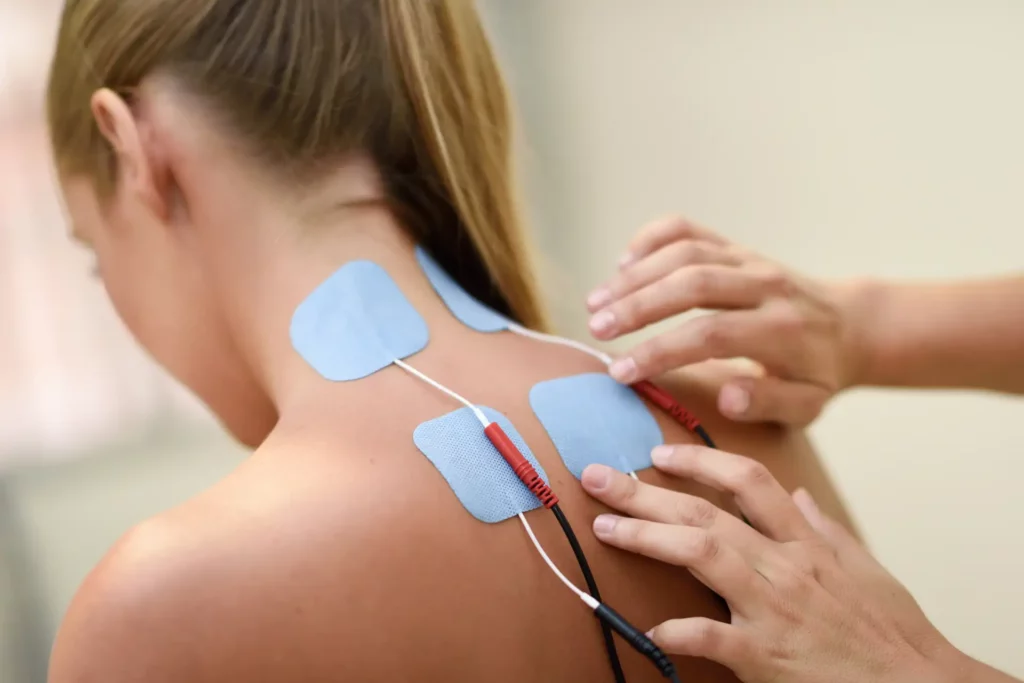
When patients first hear about peripheral nerve stimulation, one of the most common reactions is some version of: “Wait, isn’t that just a TENS unit?” It’s an understandable question. Both use electrical stimulation to manage pain, and both are unfamiliar enough to most people that they blur together. But the two are genuinely different therapies, and understanding why matters for anyone deciding whether PNS is worth pursuing.
What a TENS Unit Actually Is
A TENS (transcutaneous electrical nerve stimulation) unit is an external device. Sticky pad electrodes are placed on the skin over or near the painful area, connected to a small battery-powered box, and mild electrical currents pass through the skin toward the nerves underneath. It’s noninvasive, inexpensive, and widely available without a prescription in many cases. It can offer some patients temporary relief, but the research on how well it actually works is mixed, and the effect, when present, tends to be modest and short-lived once the unit is turned off.
What Makes PNS Different
PNS uses a thin wire placed under the skin, directly next to the specific nerve responsible for the pain, using image guidance to ensure accurate placement. Because the stimulation happens right at the source rather than passing through skin, fat, and muscle first, it can deliver a much more precise and consistent effect. The therapy also starts with a real clinical trial period, monitored by a physician, using the same system that would potentially become permanent, not a general-purpose device bought off the shelf.
Why the Comparison Undersells What PNS Can Do
It’s worth being direct about this: TENS is a reasonable, low-risk option to try for mild or diffuse pain, and there’s nothing wrong with trying it first. But for people with focal, persistent pain that hasn’t responded to conservative treatment, comparing PNS to a TENS unit sets expectations far too low. PNS is a monitored medical procedure with a structured trial-then-permanent-decision process behind it, closer in category to spinal cord stimulation or dorsal root ganglion stimulation than to a drugstore pain-relief gadget, even though both use electrical currents in some form.
A Simple Way to Think About the Difference
If TENS is like trying to influence a conversation by talking loudly from another room, PNS is like being handed the microphone standing right next to the person you’re trying to reach. Both involve sound, but only one is actually positioned to have a precise, targeted effect.
The Takeaway
If a TENS unit has given you some temporary relief, that’s actually useful information, it can suggest that stimulation-based therapy might work for your kind of pain in general. PNS takes that same underlying idea and delivers it in a far more targeted, clinically monitored way. If you’ve tried TENS with limited or short-lived success, that doesn’t rule out PNS. If anything, it’s worth bringing up directly with a pain specialist as part of the conversation about whether PNS is right for you.