

How word choice, pacing, format, and the messenger shape whether patients actually understand their care — a review of the research.
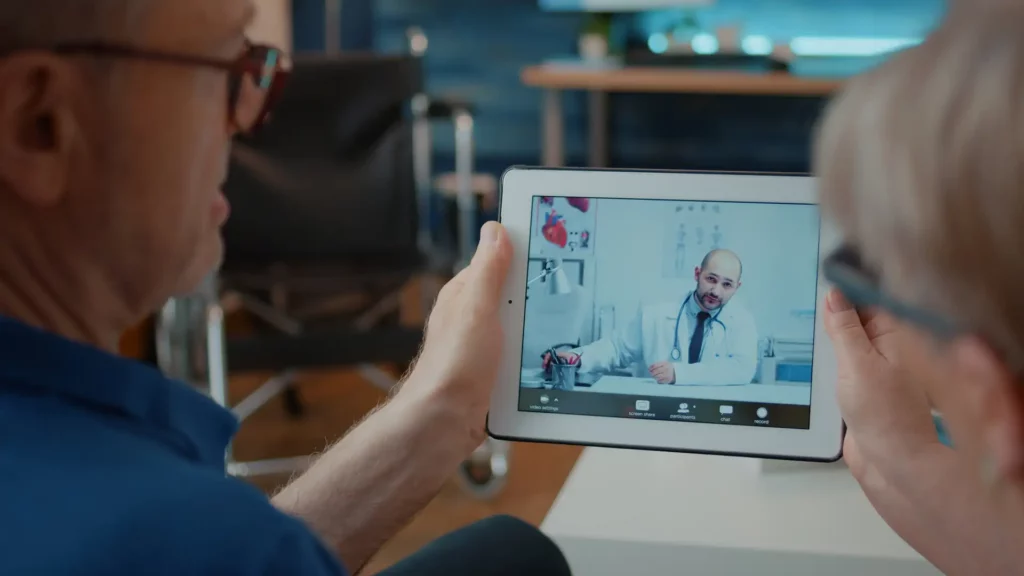
The short version. Four things independently move the needle on patient understanding, and the research supports each: (1) plain, jargon-free language; (2) short, well-paced, spaced segments; (3) video that pairs visuals with narration; and (4) a trusted, familiar messenger. Anchor’s model — short, plain-language video segments delivered at the point of care by the patient’s own provider — sits at the intersection of all four.
Why this matters
Patients forget most of what they are told. A foundational review found people forget 40-80% of medical information immediately, and nearly half of what they do remember is recalled incorrectly – and the more information delivered at once, the smaller the share retained.[9] Health literacy is not a side issue: pooled across 19 cohorts (41,000+ people), lower health literacy carries a 25% higher mortality risk (HR 1.25).[6] A large AHRQ review links low health literacy to more ER and inpatient use, worse medication management, and higher mortality in older adults.[7]
1. Clear language: how you say it changes what patients understand
Rewriting health information in plain language produces large, measurable gains. In a randomized trial (n=488), a plain-language version of a health recommendation was understood correctly about 20 percentage points more often than the standard version (a 19.8-point gain), and readers also reported higher satisfaction and greater intent to follow the advice.[1] The flip side is jargon: in a survey on common clinical phrases, when a chest X-ray was described as “impressive,” roughly 79% of people misunderstood it, thinking it was good news when it signals a problem.[2]
Yet most materials are written far above what patients can read. A 20-year analysis of 2,585 patient-education documents found a mean reading level around 11th-14th grade – far above the recommended 6th-8th grade level (only ~2% were at or below 6th grade).[3] Standard guidance is to write patient materials at a 6th-8th grade reading level, while the average U.S. adult reads at roughly the 8th-9th grade level.[4]
Confirming understanding also works. Across a 20-study systematic review, the teach-back method improved comprehension, health literacy, medication adherence, and self-care in 19 of 20 studies, with modest readmission reductions in the studies that measured them.[5] And better health literacy tracks with better adherence, with the largest intervention gains among lower-income and minority patients.[8]
2. Speed, length, and timing: less at once, spaced over time
Cognitive-load research is clear that comprehension falls as the volume and pace of information rise.[9] Breaking content into smaller segments helps: a meta-analysis of the segmenting effect found short, digestible units improved retention and knowledge transfer and lowered cognitive load, with system-paced segments outperforming a single long block.[10] A recent meta-analysis of microlearning across 42 studies (15,000+ learners) reported a sizable advantage for bite-sized formats on both learning and retention (though it is a newer, more heterogeneous literature).[11]
For video specifically, analysis of millions of viewing sessions found engagement peaks at about 6 minutes and drops sharply beyond ~9-12 minutes – a design heuristic for segment length (it measures engagement, not learning).[12]
Timing and repetition matter as much as length. The spacing effect is one of the most robust findings in learning science: across 317 experiments, spaced practice beat massed practice (47% vs 37% recall), with the gap widening over time.[13] It translates directly to medicine – a randomized trial of spaced education in medical students showed large retention gains months later,[14] and a 2024 meta-analysis found small but significant knowledge and retention gains from spaced digital education for health professionals.[15] Letting learners control their own pace (pause, re-watch) further improves memory.[16]
3. Video and multimedia: visuals plus narration beat text alone
Video is a strong delivery format for patient understanding. A 2024 systematic review and meta-analysis found video improved comprehension versus written material (Hedges’ g ≈ 0.65) and versus traditional methods (g ≈ 0.55).[17] A meta-analytic review of animated patient-education videos found a consistent knowledge gain (d ≈ 0.35), larger in real patient populations,[18] and a 2024 review found animations improved information recall in 11 of 15 randomized trials.[19]
This is exactly what learning science predicts. A 2025 meta-analysis of multimedia-learning research confirmed a strong multimedia effect (visuals + words beat words alone, g ≈ 0.68) and an even larger modality effect (narration beats on-screen text, g ≈ 0.82) – a direct argument for narrated video over text handouts.[20]
Two honesty flags. The highest-rigor synthesis – a Cochrane review of audio-visual information for informed consent – found AV may slightly improve understanding but rated the evidence low quality, with anxiety effects unclear.[21] And video does not automatically fix everything: benefits are strongest for knowledge and recall, weaker for durable behavior change (though bowel-prep videos measurably improve colonoscopy preparation),[22] and adding animation alone did not close numeric-risk comprehension gaps for low-literacy patients in one careful trial.[23] Format helps; it complements rather than replaces clear content and a trusted explainer.
4. The messenger: does a trusted, connected source increase understanding?
Yes – who delivers the information, and the patient’s relationship to them, measurably affects trust, comprehension, and adherence. A meta-analysis of 47 studies (34,000+ patients) found trust in the clinician strongly predicts satisfaction (r ≈ 0.57) and is associated with better adherence and health behaviors (effects on hard clinical endpoints were smaller).[24]
The most striking causal evidence comes from a randomized experiment in Oakland: Black men randomly assigned to a race-concordant physician took up substantially more preventive services – diabetes screening, cholesterol testing, and flu vaccination all rose sharply – and the effect appeared only after the face-to-face encounter, pointing to trust built in the interaction.[25] Language concordance shows a similar pattern: across 33 studies, most found better understanding, education, and disease control when patient and clinician shared a language,[27] and race-concordant visits show better communication across several domains (with mixed findings on quality and satisfaction).[28]
Crucially, the driver appears to be connection, not demographics per se. A well-controlled study found that patients’ perceived personal similarity and the clinician’s patient-centered communication predicted trust and intent to adhere more than demographic matching – and that good communication created a sense of similarity even across different backgrounds.[26] Trusted-messenger research agrees: audiences trust health professionals most, but shared identity and authenticity are core trust drivers, especially for marginalized groups.[30]
A continuous, familiar clinician also carries measurable weight: a systematic review found greater continuity of care is associated with lower mortality in most studies,[31] and trust in one’s physician predicts self-efficacy and adherence.[32] Peer messengers extend the same principle – community health workers who share a patient’s community and culture produce modest but real improvements (e.g., better diabetes control).[29]
What this means for point-of-care video from a known provider
Bottom line. The evidence lines up behind a specific design, and it happens to be Anchor’s: plain-language scripts written at a 6th-8th grade level[1] [3] [4]; delivered as short, narrated video segments (~6 minutes, visuals + voice) that patients can pause and re-watch[12] [16] [17] [20]; spaced and revisited rather than dumped in one visit[13] [15]; and framed or delivered by a provider the patient knows and trusts, which is where trust, concordance, and continuity turn comprehension into action.[24] [25] [26] [31]
One honest caveat to carry into any external claims: there is no single randomized trial proving “the patient’s own doctor on video raises health literacy.” That conclusion is inferred by combining well-established bodies of evidence – plain language, segmenting and spacing, multimedia design, and messenger trust/concordance/continuity. Each strand is solid; the synthesis is the argument.
A note on evidence strength
Strongest evidence (meta-analyses / large systematic reviews): plain language[1], teach-back[5], health-literacy-and-mortality[6] [7], segmenting[10], spacing[13] [14] [15], video comprehension[17] [18], multimedia design[20], clinician trust[24], and the concordance RCT[25]. Weaker or newer (treat as directional): microlearning magnitude[11], the 6-minute video figure (engagement, not learning)[12], and AV informed-consent (low-quality body of evidence).[21]
This post summarizes published research for background and discussion; it is not medical or legal advice, and specific marketing claims should be matched to the strongest applicable citation. Download the full study here.
References
- Sayfi S, Charide R, Elliott SA, et al. A multimethods randomized trial found that plain language versions improved adults’ understanding of health recommendations. J Clin Epidemiol. 2024;165:111219. https://www.jclinepi.com/article/S0895-4356(23)00303-7/fulltext
- Gotlieb R, Praska C, Hendrickson MA, et Accuracy in Patient Understanding of Common Medical Phrases. JAMA Netw Open. 2022;5(11):e2242972. (n=215 survey.) https://psnet.ahrq.gov/issue/accuracy-patient-understanding-common-medical-phrases
- Rooney MK, Santiago G, Perni S, et Readability of Patient Education Materials From High-Impact Medical Journals: A 20-Year Analysis. J Patient Exp. 2021;8. https://journals.sagepub.com/doi/10.1177/2374373521998847
- AHRQ Health Literacy Universal Precautions Toolkit, 2nd , Tool 11 (Design Easy-to-Read Material). https://www.ahrq.gov/health-literacy/improve/precautions/tool11.html
- Talevski J, Wong Shee A, Rasmussen B, Kemp G, Beauchamp A. Teach-back: a systematic review of implementation and impacts. PLOS ONE. 2020;15(4):e0231350. https://journals.plos.org/plosone/article?id=10.1371/journal.pone.0231350
- Fan Z, Yang Y, Zhang Association between health literacy and mortality: a systematic review and meta-analysis. Arch Public Health. 2021;79:119. https://archpublichealth.biomedcentral.com/articles/10.1186/s13690-021-00648-7
- Berkman ND, Sheridan SL, Donahue KE, Halpern DJ, Crotty Low Health Literacy and Health Outcomes: An Updated Systematic Review. Ann Intern Med. 2011;155(2):97-107. https://www.acpjournals.org/doi/10.7326/0003-4819-155-2-201107190-00005
- Miller TA. Health literacy and adherence to medical treatment in chronic and acute illness: a meta-analysis. Patient Educ Couns. 2016;99(7):1079-1086. https://pubmed.ncbi.nlm.nih.gov/26899632/
- Kessels Patients’ memory for medical information. J R Soc Med. 2003;96(5):219-222. https://pmc.ncbi.nlm.nih.gov/articles/PMC539473/
- Rey GD, Beege M, Nebel S, et A Meta-analysis of the Segmenting Effect. Educ Psychol Rev. 2019;31(2):389-419. https://doi.org/10.1007/s10648-018-9456-4
- Jainuri M, Kamid, Syaiful, Huda Microlearning Effectiveness in Higher Education: A Systematic Review and Meta-Analysis (42 studies, 15,673 participants). MATHEMA J Pendidik Mat. 2025;7(2):630-642. https://doi.org/10.33365/jm.v7i2.517
- Guo PJ, Kim J, Rubin How Video Production Affects Student Engagement: An Empirical Study of MOOC Videos. Proc. ACM Learning@Scale 2014. (Median engagement ~6 min.) https://dl.acm.org/doi/10.1145/2556325.2566239
- Cepeda NJ, Pashler H, Vul E, Wixted JT, Rohrer Distributed practice in verbal recall tasks: a review and quantitative synthesis. Psychol Bull. 2006;132(3):354-380. https://augmentingcognition.com/assets/Cepeda2006.pdf
- Kerfoot BP, DeWolf WC, Masser BA, Church PA, Federman DD. Spaced education improves the retention of clinical knowledge by medical students: an RCT. Med Educ. 2007;41(1):23-31. https://pubmed.ncbi.nlm.nih.gov/17209889/
- Martinengo L, et Spaced Digital Education for Health Professionals: Systematic Review and Meta-Analysis. J Med Internet Res. 2024;26:e57760. https://www.jmir.org/2024/1/e57760
- Tullis JG, Benjamin On the effectiveness of self-paced learning. J Mem Lang. 2011;64(2):109-118. https://doi.org/10.1016/j.jml.2010.11.002
- Galmarini E, et al. The effectiveness of visual-based interventions on health literacy in health care: a systematic review and meta-analysis. BMC Health Serv Res. 2024;24:718. https://bmchealthservres.biomedcentral.com/articles/10.1186/s12913-024-11138-1
- Feeley TH, Keller M, Kayler Using Animated Videos to Increase Patient Knowledge: A Meta-Analytic Review. Health Educ Behav. 2023;50(2):240-249. https://journals.sagepub.com/doi/10.1177/10901981221116791
- Hansen S, et The Effectiveness of Video Animations as a Tool to Improve Health Information Recall for Patients: Systematic Review. J Med Internet Res. 2024;26:e58306. https://www.jmir.org/2024/1/e58306
- Cromley JG, Chen R. A meta-analysis of Richard Mayer’s multimedia learning research: Searching for boundary conditions of design principles across multiple media types (181 studies, 591 effects). Educ Res Rev. 2025;49:100730. https://par.nsf.gov/servlets/purl/10637927
- Synnot A, Ryan R, Prictor M, Fetherstonhaugh D, Parker Audio-visual presentation of information for informed consent for participation in clinical trials. Cochrane Database Syst Rev. 2014. https://www.cochrane.org/CD003717
- Ye Z, et al. Educational video improves bowel preparation in patients undergoing colonoscopy: a systematic review and meta-analysis (8 RCTs). Ann Palliat 2020;9(3):671-680. https://apm.amegroups.org/article/view/40218/html
- Housten AJ, et al. Does Animation Improve Comprehension of Risk Information in Patients with Low Health Literacy? A Randomized Trial. Med Decis Making. 2020;40(1):17-28. https://journals.sagepub.com/doi/10.1177/0272989X19890296
- Birkhauer J, Gaab J, Kossowsky J, et Trust in the health care professional and health outcome: a meta-analysis (47 studies, n=34,817). PLOS ONE. 2017;12(2):e0170988. https://journals.plos.org/plosone/article?id=10.1371/journal.pone.0170988
- Alsan M, Garrick O, Graziani Does Diversity Matter for Health? Experimental Evidence from Oakland. Am Econ Rev. 2019;109(12):4071-4111. https://www.aeaweb.org/articles?id=10.1257/aer.20181446
- Street RL Jr, O’Malley KJ, Cooper LA, Haidet Understanding Concordance in Patient-Physician Relationships. Ann Fam Med. 2008;6(3):198-205. https://www.annfammed.org/content/6/3/198
- Diamond L, Izquierdo K, Canfield D, Matsoukas K, Gany F. A Systematic Review of the Impact of Patient-Physician Non-English Language Concordance on Quality of Care and Outcomes. J Gen Intern Med. 2019;34(8):1591-1606. https://link.springer.com/article/10.1007/s11606-019-04847-5
- Shen MJ, et The Effects of Race and Racial Concordance on Patient-Physician Communication: A Systematic Review of the Literature. J Racial Ethn Health Disparities. 2018;5(1):117-140. https://link.springer.com/article/10.1007/s40615-017-0350-4
- Palmas W, et al. Community Health Worker Interventions to Improve Glycemic Control in People with Diabetes: Systematic Review and Meta-Analysis. J Gen Intern Med. 2015;30(7):1004-1012. https://link.springer.com/article/10.1007/s11606-015-3247-0
- Demeshko A, et al. Characterising trusted spokespeople in noncommunicable disease prevention: A systematic scoping review. Prev Med 2022;29:101934. https://pmc.ncbi.nlm.nih.gov/articles/PMC9356185/
- Baker R, Freeman GK, Haggerty JL, Bankart MJ, Nockels Primary medical care continuity and patient mortality: a systematic review. Br J Gen Pract. 2020;70(698):e600-e611. https://bjgp.org/content/70/698/e600
- Lee YY, Lin The effects of trust in physician on self-efficacy, adherence and diabetes outcomes. Soc Sci Med. 2009;68(6):1060-1068. https://pubmed.ncbi.nlm.nih.gov/19162386/